
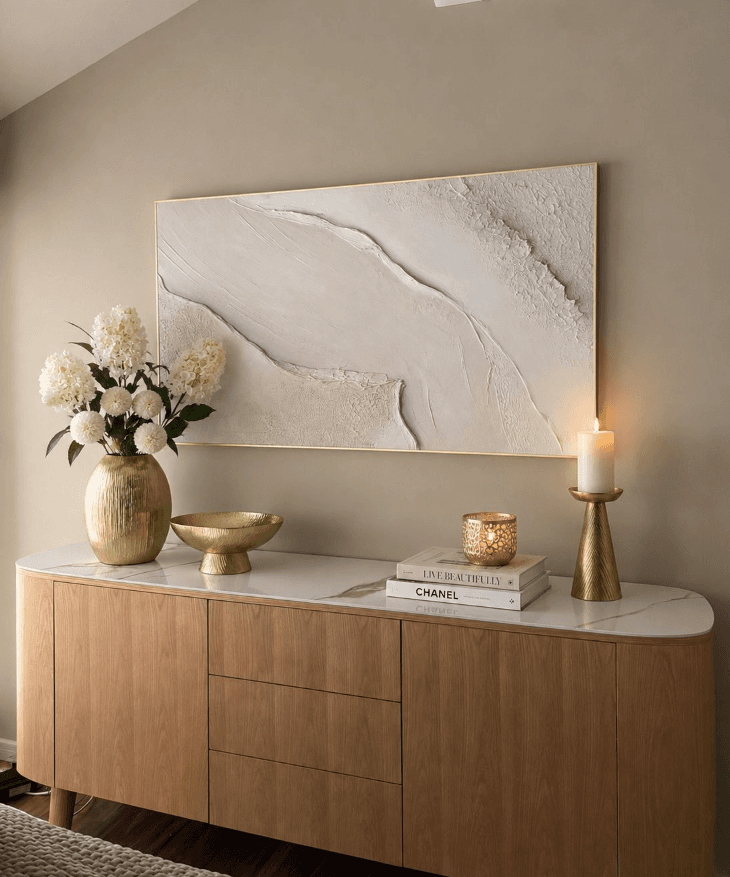
For modern showflat projects, texture painting is more than wall decoration. It adds depth, strengthens the interior concept, and creates a more refined visual experience.
For interior design companies, choosing the right texture painting means considering the entire space. Size, color, texture, composition, and frame all need to coordinate with the furniture, materials, lighting, and overall design language.
For this showflat project, we developed a complete custom texture painting solution based on the interior design concept, from artwork planning and customization to production, quality control, packaging, and delivery.
Texture Painting Designed Around the Interior
A successful texture painting project should begin with the interior itself.
Before developing the artwork, we review the project renderings, wall dimensions, furniture layout, material finishes, color palette, and artwork locations.
This allows us to determine which type of texture painting works best for each space.
A large living room may require an oversized horizontal texture painting, while a bedroom may need a softer and more minimalist composition.
The goal is not simply to fill an empty wall. The texture painting should feel like part of the original interior design.
Custom Size for Better Proportion
Standard artwork sizes do not always work for professional interior projects.
With custom texture painting, the dimensions can be adjusted according to the wall, sofa, bed, console, or other furniture.
A correctly sized large texture painting helps create visual balance and gives the room a stronger focal point.
If the artwork is too small, the wall can feel unfinished. If it is too large, it may overpower the furniture.
Custom sizing allows the texture painting to fit naturally into the space.
Color Matching for the Interior Palette
Color is an important part of every custom texture painting project.
For showflat interiors, we often work with neutral and sophisticated tones such as:
- Beige
- Cream
- Ivory
- Taupe
- Warm grey
- Greige
- Champagne
- Muted blue
- Soft green
The colors of the texture painting can be adjusted to coordinate with fabric, wood, stone, metal, and wall finishes.
The artwork does not need to match every element exactly. A carefully controlled contrast can make the texture painting stand out while still feeling connected to the room.
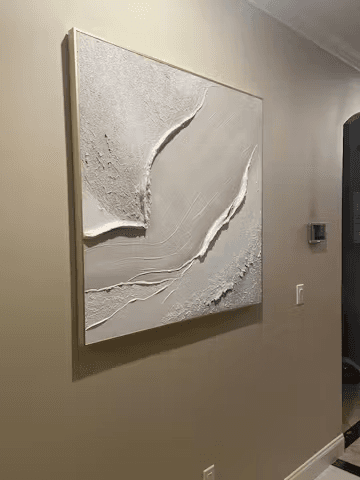
Handmade Texture and Surface Detail
The surface is what gives texture painting its unique character.
Depending on the project, the artwork can include layered texture, palette knife marks, plaster-style surfaces, sand texture, sculptural relief, or more dimensional 3D texture painting effects.
These raised surfaces interact with natural light and spotlights, creating subtle highlights and shadows.
This makes texture painting especially suitable for showflats, luxury apartments, villas, hotels, and other professionally designed interiors.
Handmade Production
After the size, color, and texture direction are confirmed, the handmade texture painting enters production.
During production, attention is given to:
- Composition
- Color consistency
- Texture depth
- Surface quality
- Edge finishing
- Frame details
For projects involving multiple artworks, each texture painting should work individually while still feeling connected to the overall interior concept.
This is particularly important for interior design companies managing a complete showflat or residential project.
Quality Control and Project Packaging
Before shipment, every custom texture painting is inspected for size, color, surface condition, texture quality, frame finish, edges, and hanging hardware.
Because texture painting has a dimensional surface, packaging also requires additional protection.
Depending on the artwork size and structure, packaging may include foam protection, corner guards, reinforced cartons, or wooden cases.
For projects with multiple artworks, each piece can also be labeled according to its intended installation area.
This makes final installation easier for the interior design team.
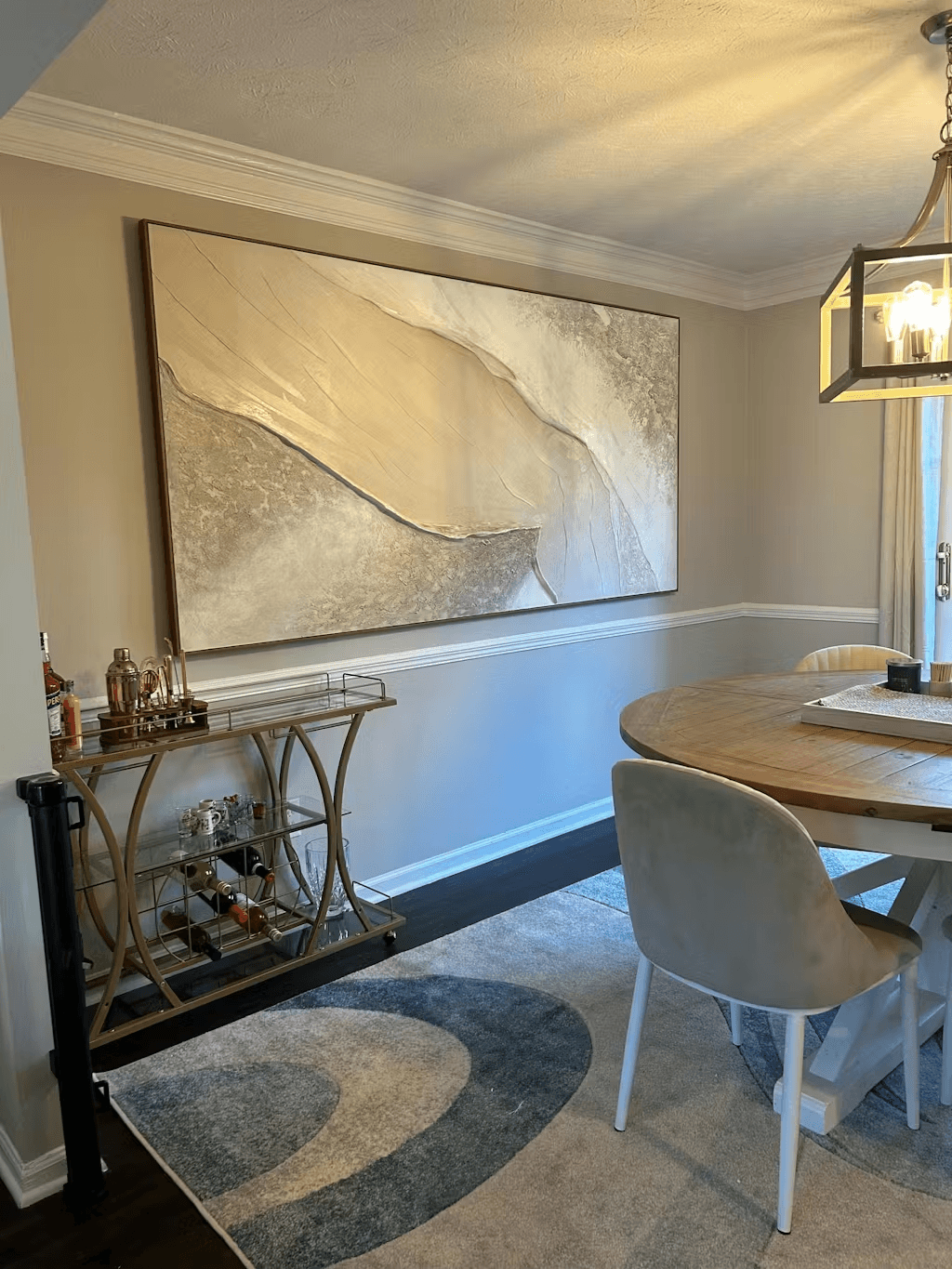
Why Interior Designers Choose Custom Texture Painting
The biggest advantage of custom texture painting is flexibility.
Interior designers can customize:
- Size
- Color
- Texture
- Composition
- Frame
- Orientation
- Quantity
This allows the artwork to be developed specifically for the space instead of forcing the designer to choose from fixed retail sizes or colors.
A standard painting can decorate a room. A carefully developed custom texture painting can become part of the interior design itself.
Texture Painting for More Interior Projects
Although this project focuses on a showflat, texture painting can also be customized for:
- Model homes
- Luxury apartments
- Villas
- Hotels
- Restaurants
- Offices
- Lobbies
- Commercial spaces
For every project, the same principle applies:
The texture painting should be developed around the space.